Working with marble is a complex process that combines technical preparation, artisanal expertise, and a deep knowledge of the material. At Rigo Marmi, this journey has been built and refined over time, honed project after project, until it became a recognizable, reliable method. Every phase — from selecting the block at the quarry through to after-sales support — is designed to ensure consistency, quality, and continuity between design and execution.
Rigo Marmi
1
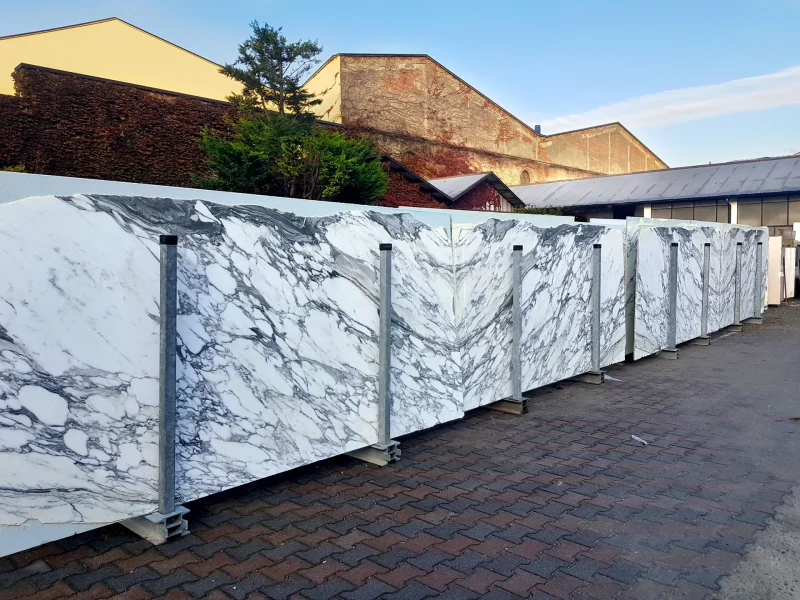
The quality of a project always begins with material selection, which is why Rigo Marmi devotes great attention to this phase, assessing every piece from both an aesthetic and a technical standpoint. Selection takes place directly at the quarries, where blocks and slabs are examined to verify density, homogeneity, veining, strength, and long-term behavior. This on-site inspection allows us to pinpoint the characteristics of the raw material and to minimize issues in the later phases.
Once selected, the slabs undergo further laboratory testing, ensuring that every piece arrives in production fully aligned with the project’s expectations.
2
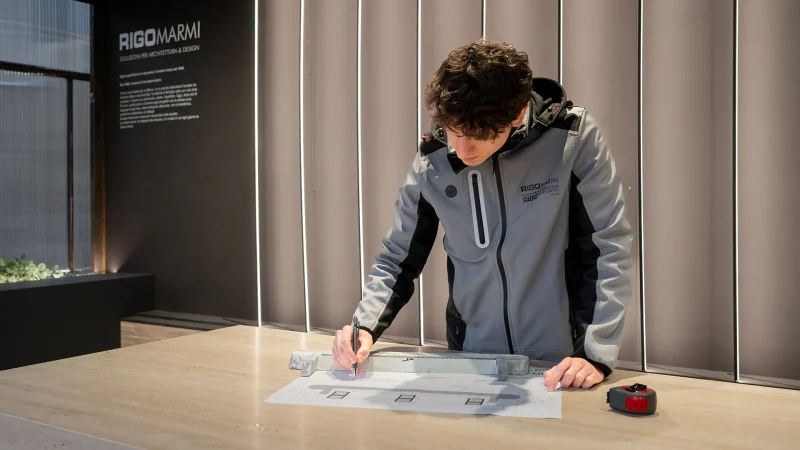
Technical design is one of Rigo Marmi’s most significant strengths: it is the moment when idea, function, and material are translated into working drawings, technical specifications, cutting lists, and digital models. The technical office is made up of surveyors and architects — a deliberate choice that allows us to communicate effectively with design studios and to interpret every request with specific expertise. The use of advanced tools such as BIM, CAD, and 3D modeling allows us to work with precision during engineering and to anticipate potential issues before production.
The transition from design to production is seamless: by the time the drawing reaches the workshop, every detail has already been defined. This allows work to progress smoothly, reducing the margin for error and ensuring consistency between the design and the final result.
3
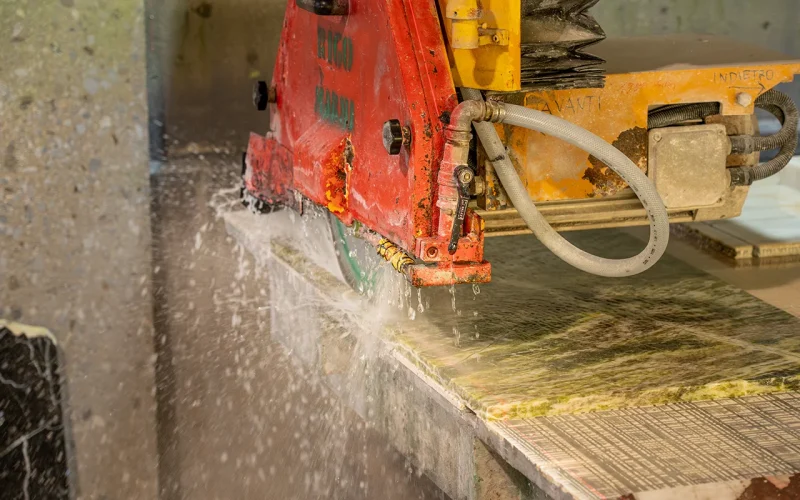
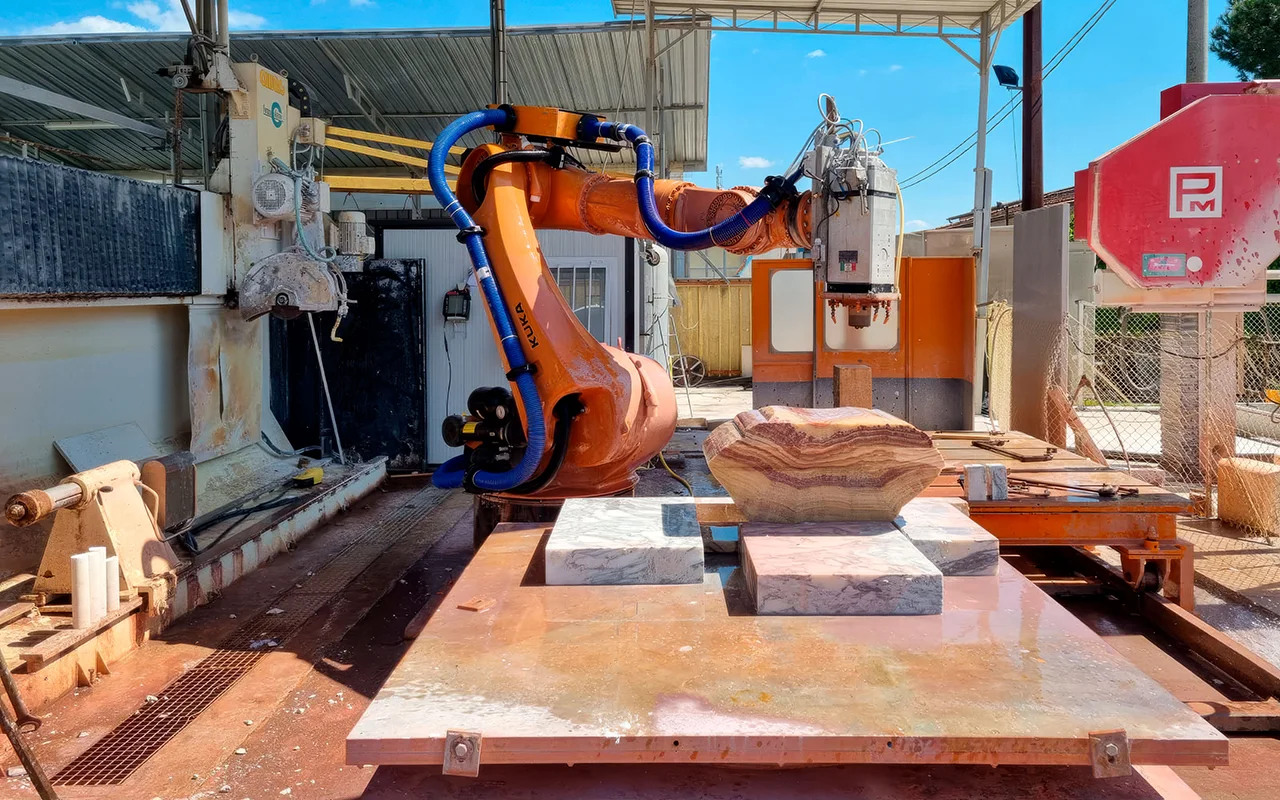
Fabrication is the heart of the process. In our workshops, the raw material takes shape.
Rigo Marmi operates through three production sites, each with specific and complementary characteristics:
Rigo Marmi workshop — Milan
Located at the company’s headquarters, it allows us to closely oversee every stage of fabrication and to respond quickly to changes or production needs. It is primarily dedicated to work for residential and commercial projects in the city.
Rigo Marmi workshop — Verona
Specialized in large-scale production and the creation of lightweight slabs.
Here, stone thickness can be reduced and specific technical backings, such as aluminum honeycomb, can be applied.
Rigo Marmi workshop — Carrara
The reference point for block marble processing, thanks to its proximity to the white marble quarries. This site enables impeccable selection and work of the highest precision.
The technologies we use include the latest-generation machinery — all CNC-controlled and waterjet systems — while the final stage of production is entrusted to the artisanal expertise of our finishers. This approach allows us to deliver bespoke work, fully aligned with the needs of every project.
4
Quality control is not a final step but a phase integrated throughout the Rigo Marmi method.
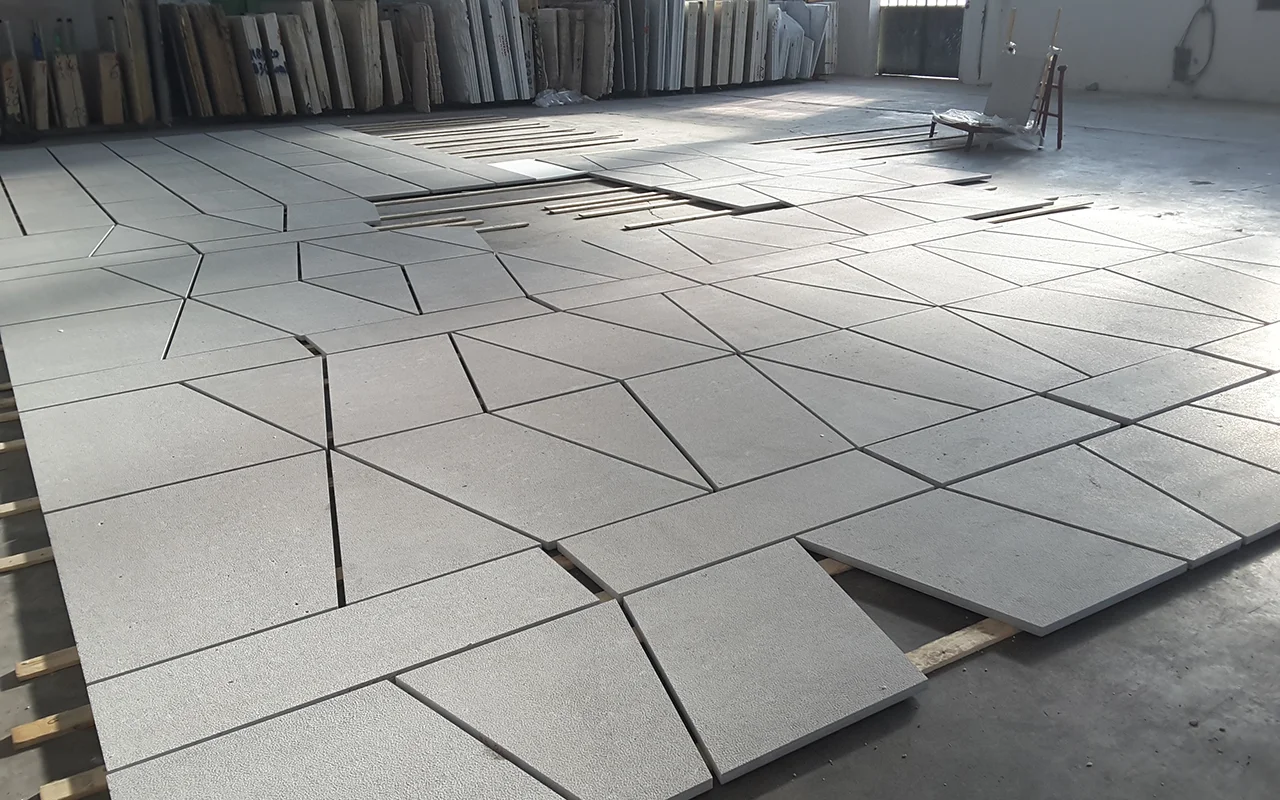
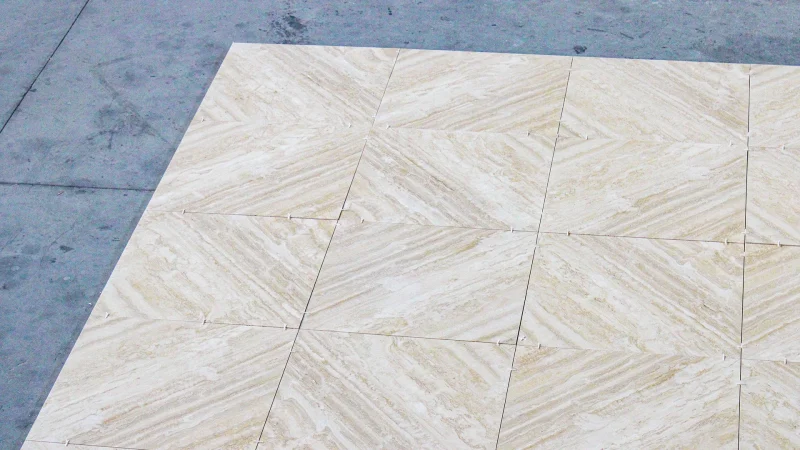
The most significant moment of this verification is the dry lay, a pre-installation carried out entirely in the workshop.
The dry lay involves aligning the material across large surfaces to simulate the installation. It is an essential step because it allows us to
The surfaces are then numbered, catalogued, and prepared for assembly, ensuring precise and orderly management on site.
5
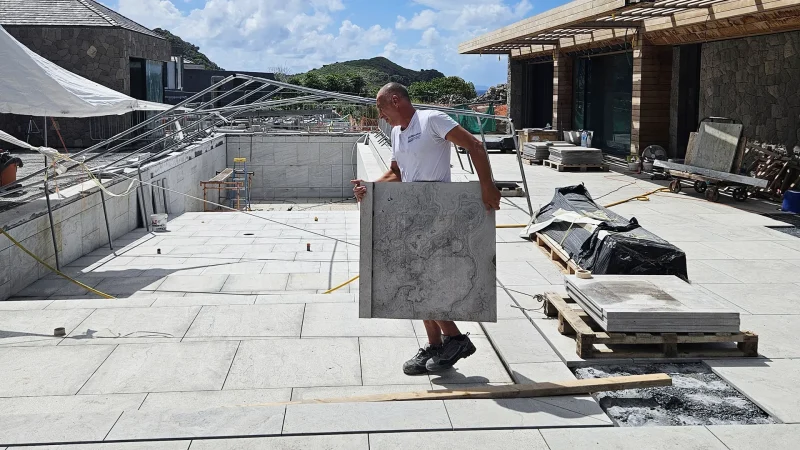
Installation is the moment when all the work of the previous phases takes shape in the designed space. To guarantee the highest quality, Rigo Marmi relies exclusively on its own installers, each with direct experience working with marble and managing complex installations.
6
Marble is a living material — elegant and resilient, yet delicate in certain conditions. To ensure its durability, Rigo Marmi applies specific treatments based on the intended use and the characteristics of the material.
Water-repellent treatments create an invisible barrier that reduces liquid absorption, prevents stains and marks, simplifies daily maintenance, and preserves the natural appearance of the surfaces. The products we use are certified and leave the aesthetics of the material untouched.
In damp or high-traffic environments, anti-slip treatments can be applied, using the latest-generation chemical technologies designed to improve safety without altering the visual perception of the surface.
7
The Rigo Marmi service does not end with installation: the company remains a point of reference over time, offering technical support, maintenance advice, and targeted interventions when needed.
Rigo Marmi’s support includes:
The goal of after-sales support is to ensure that the marble retains its beauty, functionality, and consistency with the original design over time.